Substance Use in Adolescents and Young Adults, from Initiation to Dependence
Research Spotlight No. 2-2026
Editor’s Notes:
This Research Spotlight reflects a selection of ICPSR studies and the literature discussing or analyzing the data in those studies, as of May 2026.
Created by ICPSR Bibliography staff members, using the ICPSR Bibliography of Data-related Literature as their source, Research Spotlights are short reports that synthesize the findings about one or several related topics. Each one contains links to the publications and the underlying ICPSR studies, where the data can be accessed.
It is important to note that the works highlighted do not represent the Research Spotlight author’s nor ICPSR’s point of view. Research Spotlights are not intended to draw conclusions, nor are they comprehensive literature reviews, due to the extensive existing scholarship. Their main purpose is to show how scholars are using data available from ICPSR in their primary and secondary analyses.
Introduction
This Research Spotlight examines the complex patterns of substance use among adolescents and young adults, focusing on the co-use and dual-use of tobacco, cannabis, and alcohol. These substances represent the drugs most commonly abused by adolescents and young adults (Wang & Hoyte, 2018). Data about these substances are collected annually from nationally representative surveys, such as Monitoring the Future (MTF) and the Population Assessment of Tobacco and Health (PATH) Study. These data help researchers understand how such substances impact adolescents and young adults. They also allow experts to make vital public health recommendations based on current substance use trends.
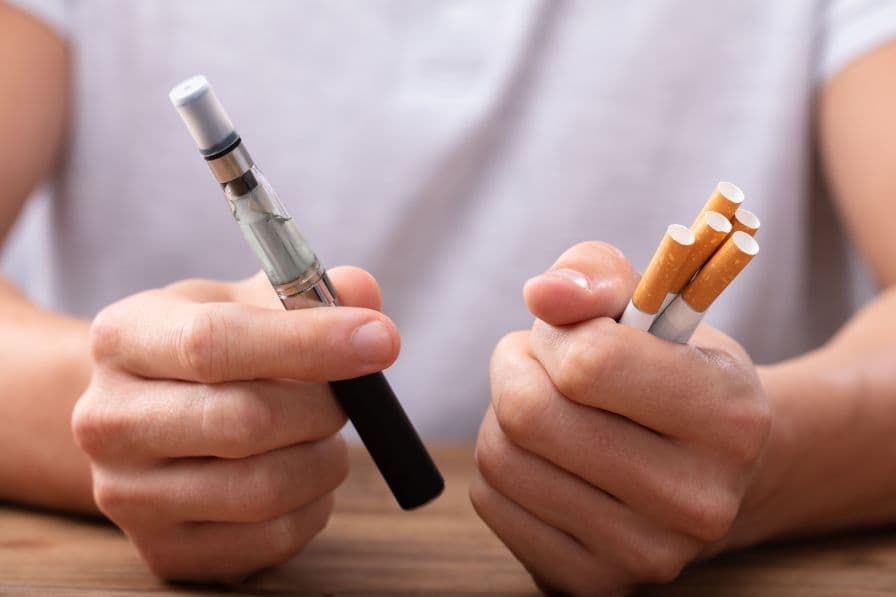
To navigate this literature effectively, it is essential to define several key terms. Adolescents generally are considered to be youth ages 12–17, while young adults or emerging adults typically include the age ranges of 18–24 or 18–30. There is some overlap between young adults and adults, as adults are defined as those over the age of 18. Co-use is the concurrent use of different substances, such as cannabis and tobacco, whereas dual-use specifically refers to using two different delivery systems, such as combustible cigarettes and electronic nicotine delivery systems (ENDS). These delivery systems are further categorized as combustible (e.g., products that are smoked) or non-combustible (e.g., products that are vaped or used as pouches).
ICPSR holds both public- and restricted-use data that allow researchers to investigate these complex relationships. Many datasets are available from large, topically-focused archives at ICPSR, such as the National Archive of Health and Data on Drug Abuse (NAHDAP), the National Archive of Criminal Justice Data (NACJD), and from Data Sharing for Demographic Research (DSDR), a population health data archive. In the following sections, we highlight four emerging topics explored in research articles that are found in the ICPSR Bibliography of Data-related Literature. These topics include: substance initiation and stability, the shifting trends in modes of consumption, the impact of pain severity on substance use, and the interaction between sleep and substance use.
Substance initiation, substance progression, and the stability of substance use
Research indicates that the initiation of one substance often serves as a pathway to engage in additional substance use in the future (Bares et al., 2023; Chen et al., in press; Mantey et al., 2025). Using 5 years of cross-sectional data from 8th to 12th graders in the MTF study, Bares et al. (2023) found that initiation of tobacco use in adolescence served as a gateway into the exclusive use of e-cigarettes and cannabis or the dual use of the substances. Adolescents with a history of tobacco use were significantly more likely to exhibit higher rates of exclusive e-cigarette use (14.5 percent), exclusive cannabis use (23.5 percent), and dual use of e-cigarettes and cannabis (17.1 percent) compared to adolescents who had never used tobacco. In addition to tobacco use progressing to cannabis initiation, Manety et al. (2025) showed that alcohol use in adolescents predicted future initiation of cannabis vaping in a subsequent wave in the PATH Study. Analyzing restricted-use PATH Study data files from Wave 4 (2017) and Wave 6 (2021), Chen et al. (in press) showed that past 12-month cannabis use among youth and young adults who had never used tobacco predicted a higher likelihood of progressing to regular tobacco use within four years (32.7 percent and 14.0 percent, respectively). These studies provide evidence that initial substance use may be a risk factor for future substance use of primarily tobacco or cannabis in youth and young adults who had no prior history of using these substances.
Beyond the initiation of substances and the progression of using additional substances, the stability of use in adolescents varies by substance. Using data from the Bullying, Sexual, and Dating Violence Trajectories from Early to Late Adolescence in the Midwestern United States study, Lawrence et al. (in press) found that the onset of cannabis use in adolescents was highly likely to lead to continuous and stable use in subsequent years. However, the onset of alcohol use in adolescents did not always lead to stable consumption over time. While the research suggested that substance initiation in adolescents can progress to additional substance use, the stability of substance use over time varies.
Trends in combustible and non-combustible tobacco and cannabis use
Current trends in modes of substance use and the transitions to combustible or non-combustible modes vary primarily by age and substance. Block et al. (in press) showed notable age differences in the modes of tobacco and cannabis co-use through an analysis of Wave 7 (2022-2023) restricted-use data from the PATH Study. Older adults (26+) and adolescents consistently preferred one mode of consumption when co-using cannabis and tobacco, whereas the mode of consumption in young adults varied by substance. Older adults showed a clear preference for combustible products and adolescents for non-combustible products, such as e-cigarettes and vaped cannabis. Young adults preferred combustible cannabis, but non-combustible tobacco products. Goulette et al. (2026) found similar modes of cannabis preferences among 12th graders in the MTF study. Smoking (combustible) cannabis remained the most prevalent mode of consumption at 87.3 percent, followed by vaping (non-combustible) at 45.0 percent (Goulette et al., 2026).
Trends in tobacco consumption in young adults from Block et al. (in press) align with the findings from Meich et al. (2026), who found that trends in combustible and non-combustible smoking methods changed among users aged 19-30, despite nicotine levels remaining stable from 2017 to 2022. During the study period, combustible cigarette usage decreased 10 percent, while exclusive e-cigarette use tripled (from 6 percent to 21 percent) as users moved away from combustible cigarettes. In line with the MTF findings from Miech et al. (in press), more users are moving from dual-use toward exclusive e-cigarette use, as evidenced in data from the PATH Study, though young adults remained more likely than adolescents to transition to combustible tobacco only (Evans-Polce et al., 2025).
Pain and substance use
Physical pain is a factor that significantly increases the risk of substance initiation and dependence. Wave 7 of the public-use data from the PATH Study showed that young adults experiencing moderate to severe pain are nearly twice as likely to use e-cigarettes daily, nearly twice as likely to use e-cigarettes and/or other tobacco products exclusively, and more than twice as likely to engage in the dual-use of multiple tobacco products compared to young adults with low or no pain (Carlin et al., in press). This indicates that the severity of pain is a risk factor for tobacco use and the modes of tobacco use. The relationship between moderate to severe pain and daily smoking also appears to be bidirectional. In examining longitudinal data from Waves 1-6 of the PATH Study, Costa et al. (2025) focused on two distinct populations at baseline: non-smokers with moderate to severe pain and daily smokers with no to low pain. Adults with chronic pain at baseline had an increased risk of initiating daily smoking over time, while adults who smoked daily at baseline had an increased risk of developing future moderate to severe pain (Costa et al., 2025).
Powers et al. (2023) examined pain severity as a predictor of initiation of dual-use of combustible and non-combustible tobacco products in adults in Waves 1-4 of PATH Study data. Moderate to severe pain in adults was associated with a faster initiation of co-use in the future. Additionally, moderate to severe pain at Wave 4 was associated with a risk of exclusive use of cigarettes (45 percent) or e-cigarettes (4.78 percent) and a greater risk of dual use of cigarettes and e-cigarettes (4.94 percent). This suggests that pain is a risk factor for both the initiation of dual-use and the maintenance of exclusive use or dual use. Ripley et al. (2026) found similar results with a direct relationship between pain severity and nicotine dependence using Wave 6 PATH Study data in adults.
In addition to tobacco, pain is a predictor of the initiation of co-use of alcohol and cannabis. Williams et al. (2025) used PATH Study data from Waves 1-5 to examine whether the severity of pain is a predictor of the co-use of alcohol and cannabis for emerging adults who had not engaged in co-use of these substances prior to Wave 1 but then participated in co-use in at least one of the follow-up waves. Results indicated that emerging adults with moderate to severe pain at baseline were 1.4 times more likely to engage in past-month co-use of alcohol and cannabis over the four-year period.
Sleep and substance use
Sleep and substance use are also closely linked, such that sleep may predict, indicate, or mediate substance use. Using the Future of Families and Child Wellbeing Study, Krishnan et al. (2024) found a prospective association between childhood weeknight sleep habits and future alcohol and marijuana use. Specifically, childhood sleep habits at ages 5 and 9, such as later bedtimes and shorter sleep duration by only an hour, were prospective predictors of alcohol and marijuana use by age 15.
Drawing on 2022-2023 data from the MTF panel study, more than one in five young adults reported using cannabis or alcohol to initiate sleep (Patrick et al., 2025). When broken down by substance, 18.3 percent of young adults used cannabis to initiate sleep compared to 7.2 percent of young adults who used alcohol. However, using substances to initiate sleep may be counterproductive. Drazdowski et al. (2025) analyzed the impact of cannabis and alcohol co-use on adult sleep from Waves 1 through 4 of the PATH Study. Sleep problems were defined as bad dreams, sleeping restlessly, or falling asleep during the day. The results indicated that co-use of alcohol and cannabis was associated with a 14 percent increase in reported sleep problems compared to non-users who experienced sleep problems (Drazdowski et al., 2025).
While sleep and substance use may be directly linked, sleep can serve as a mediator in the relationship between substance use and other factors (e.g., pain). Using Wave 6 data from the PATH Study, Ripley et al. (2026) examined the relationship between pain, sleep, and nicotine dependence in adults using combustible and non-combustible tobacco products. For both modalities, the results indicated that there was a direct relationship between pain severity and nicotine dependence, such that higher pain severity led to greater nicotine dependence. Crucially, sleep mediated this direct relationship in both combustible and non-combustible tobacco products. Adults experiencing severe pain experienced more severe sleep issues, and those sleep issues led to greater nicotine dependence. However, additional research is required to understand the temporal ordering of sleep, pain severity, and nicotine dependence and how these factors impact cessation attempts (Ripley et al., 2026). Prioritizing the direct and mediating factors of substance use would be beneficial to develop targeted strategies to support successful substance use cessation.
Conclusion
This Research Spotlight does not reflect all of the existing research regarding the intricacies of substance use among adolescents and young adults. These and other articles linked to the studies in NAHDAP, NACJD, and DSDR highlight how substance use begins, the shifting trends of substance consumption, and the biological factors affecting substance dependence. To see how each of the ICPSR studies mentioned in this Spotlight has been examined in other scholarly literature, to gain ideas for extending prior research, or to conduct a larger literature review, you can search the ICPSR Bibliography of Data-related Literature. Using search terms like (“Marijuana” OR “Cannabis” OR “Tobacco” OR “Nicotine”) AND (Initi*) or (“Marijuana” OR “Cannabis” OR “Tobacco” OR “Nicotine”) AND “Pain” will lead you to search results containing publications linked to the study data analyzed in them. Discovering data via the literature in this way can begin your investigation of the existing and potential uses of the data distributed by ICPSR.
When authoring publications that include your secondary analysis of study data downloaded from ICPSR, be sure to cite the study data in the publication’s references section, using the provided data citation and unique identifier (in the form of a URL containing a DOI). Once your paper is published, submit its citation to the ICPSR Bibliography via this form, so it can be added to the ICPSR Bibliography of Data-related Literature, enabling others to find, learn from, and cite your work.
Notes
Miech et al. (2026) and Patrick et al. (2025) currently use Monitoring the Future restricted-use panel data that are not yet available to be downloaded from ICPSR. Currently, NAHDAP distributes Monitoring the Future restricted panel data through 2021. Please check the Monitoring the Future: Restricted-Use Panel Study Series Page for any updates or new data releases.
Bares, C. B., Sharma, V., & Lopez-Quintero, C. (2023). Socio-demographic correlates of electronic cigarette and cannabis co-use among naïve and tobacco adolescent users. Journal of Prevention, 44(4), 457–475. https://doi.org/10.1007/s10935-023-00729-z
Block, A. C., Martin, C. D., & Smith, D. (in press). Products involved in tobacco and cannabis co-use among us adults and youth, 2022–2023. Tobacco Control. https://doi.org/10.1136/tc-2025-059612
Carlin, V. E., Nam, J. K., Ripley, G. H., Powers, J. M., Deyo, A. G., & Ditre, J. W. (in press). Pain is associated with e-cigarette use and dependence in young adults: Findings from wave 7 (2022–2023) of the Population Assessment of Tobacco and Health (PATH) Study. International Journal of Behavioral Medicine. https://doi.org/10.1007/s12529-025-10396-5
Chen, J., Messer, K., Pierce, J. P., Strong, D. R., Quach, N. E., Shi, Y., McMenamin, S. B., Khin, T. N., Stone, M. D., & Trinidad, D. R. (in press). Cannabis use and progression to regular tobacco use among United States youth and young adults: Evidence from the Population Assessment of Tobacco and Health (PATH) Study, 2017–2021. Tobacco Control. https://doi.org/10.1136/tc-2025-059634
Costa, G. P. A., Nunes, J. C., Suh, R., Sofuoglu, M., & Aquino, J. P. (2025). The bidirectional relationship between pain and tobacco use: Insights from the longitudinal Population Assessment of Tobacco and Health (PATH) Study. Drug and Alcohol Dependence, 268, 112552. https://doi.org/10.1016/j.drugalcdep.2025.112552
Drazdowski, T. K., Kelly, L., Livingston, N. R., Sheidow, A. J., & McCart, M. R. (2025). Within-person bidirectional relations between sleep problems and alcohol, cannabis, and co-use problems in a representative U.S. sample. Substance Use & Misuse, 60(12), 1923–1932. https://doi.org/10.1080/10826084.2025.2523458
Evans-Polce, R. J., Mongilio, J. M., Kcomt, L., Chen, B., & McCabe, S. E. (2025). Trends and sociodemographic differences in tobacco/nicotine transitions among U.S. adolescents and young adults using e-cigarettes, 2014–2023. Journal of Adolescent Health, 76(5), 920–927. https://doi.org/10.1016/j.jadohealth.2025.01.013
Goulette, M. R., Haney, A. M., Homish, G. G., & Kulak, J. A. (2026). Multi-modal cannabis use and binge drinking outcomes among 12th grade students in the United States, a cross-sectional analysis from 2018-2021. Substance Use & Misuse, 61(6), 871-879. https://doi.org/10.1080/10826084.2025.2581244
Krishnan, A. S., Reichenberger, D. A., Strayer, S. M., Master, L., Russell, M. A., Buxton, O. M., Hale, L., & Chang, A.-M. (2024). Childhood sleep is prospectively associated with adolescent alcohol and marijuana use. Annals of Epidemiology, 98, 25–31. https://doi.org/10.1016/j.annepidem.2024.07.048
Lawrence, T. I., Otto, E., Brown, D., Belle, A., Amador, B., & Smith, M. (in press). Measuring the longitudinal and reciprocal associations of adolescent alcohol, cannabis use, and depressive symptoms across four time points. International Journal of Mental Health and Addiction. https://doi.org/10.1007/s11469-025-01562-7
Mantey, D., Bluestein, M., Harrell, M., & Kelder, S. H. (2025, November 2-5). Alcohol Predicts Cannabis Vaping Initiation among Youth: Findings from the Population Assessment of Tobacco and Health (PATH) Study [Conference presentation abstract]. American Public Health Association (APHA) 2025 Annual Meeting, Washington, DC, United States.
Miech, R., Leventhal, A., Patrick, M., & Rodriguez, N. (2026). Trends in use of cigarettes and e-cigarettes among young adults who had smoked in adolescence: 2017–2022. Tobacco Control, 35(3), 345–350. https://doi.org/10.1136/tc-2024-059018
Patrick, M. E., Pang, Y. C., & Terry-McElrath, Y. M. (2025). Cannabis and alcohol use to initiate sleep among young adults. JAMA Pediatrics, 179(12), 1357–1369. https://doi.org/10.1001/jamapediatrics.2025.3642
Powers, J. M., Maisto, S. A., Zvolensky, M. J., Heckman, B. W., & Ditre, J. W. (2023). Longitudinal associations between pain and use of cigarettes and e-cigarettes in the Population Assessment of Tobacco and Health (PATH) Study. Nicotine & Tobacco Research, 25(3), 404–411. https://doi.org/10.1093/ntr/ntac197
Ripley, G. H., Nam, J. K., Carlin, V. E., Powers, J. M., & Ditre, J. W. (2026). The role of sleep impairment in associations between pain and nicotine/tobacco dependence in wave 6 of the Population Assessment of Tobacco and Health (PATH) Study. Substance Use & Misuse, 61(3), 366–375. https://doi.org/10.1080/10826084.2025.2561919
Wang, G. S., & Hoyte, C. (2018). Common substances of abuse. Pediatrics In Review, 39(8), 403–414. https://doi.org/10.1542/pir.2017-0267
Williams, C. M., Mastroleo, N. R., Lenzenweger, M. F., & Zale, E. L. (2025). Pain predicts past-month co-use of alcohol and cannabis among emerging adults: Results from the Population Assessment of Tobacco and Health (PATH) Study. Alcohol, 124, 111–119. https://doi.org/10.1016/j.alcohol.2025.02.003
Hildebrandt, T. (2026). ICPSR Bibliography of Data-related Literature Research Spotlight: Substance use in adolescents and young adults, from initiation to dependence. (Research Spotlight No. 2-2026). Inter-university Consortium for Political and Social Research.