Natural experiment reveals how election timing prevents voter fraud
Source citation:
Ferlenga, F., & Knight, B. (2025). Vote early and vote often? Detecting electoral fraud from the timing of 19th century elections. Journal of Public Economics, 243.
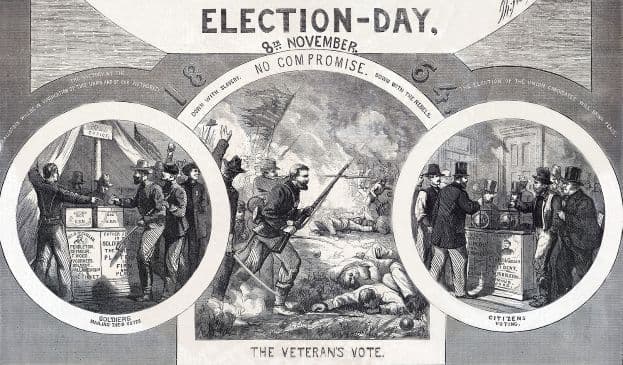
Ferlenga and Knight studied the decline of US election fraud after the federal government required states to vote on the same day in November. Since this change was implemented gradually across the country from the 1840s to the early 1900s, they could use it as a natural experiment. They employed Electoral Data for Counties in the United States: Presidential and Congressional Races, 1840-1972 from ICPSR’s member-funded archive, which contains Presidential and Congressional elections data on state and county turnout and voting populations. With these data, along with state-level information on the timing of elections, and decennial census historical maps to calculate county and state border distances, Ferlenga and Knight analyzed turnout before and after the federal election date synchronization. They found that when neighboring states started holding elections on the same day, voter turnout dropped in nearby counties by 6 to 11 percent, especially in the South, in non-secret ballot states, in competitive races without incumbents, and in small counties. They interpreted this as evidence that synchronized elections successfully prevented repeat voting, as fewer fraudulent ballots meant lower overall turnout numbers. They also tested five alternative explanations but found no other phenomenon that could account for the turnout decline.
July 10, 2025