Does growing up in a delinquent, adversity-laden environment accelerate biological aging?
Source citation:
- Gibbs, W. J., & Beaver, K. M. (2026). A longitudinal assessment of the association between telomere length and early life criminogenic environments. Journal of Developmental and Life-Course Criminology, 12(1), 12.
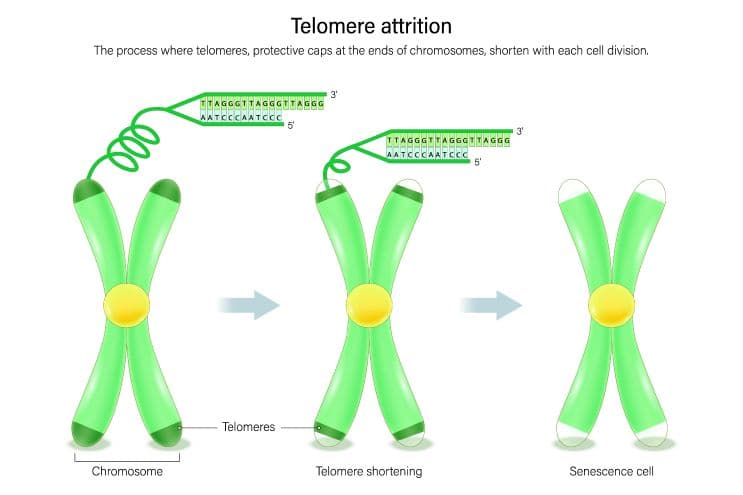
Using longitudinal data from The Future of Families and Child Wellbeing Study (FFCWS), 1998-2024, authors Gibbs and Beaver investigated the impact of genetics as well as early life environments and behaviors on telomere length. Telomeres are the protective “caps” on DNA that are a key biological marker used to measure the pace of cellular aging. The public-use FFCWS data, available from DSDR, was collected from a longitudinal sample of 1,614 youth and their parents. The study oversampled births to unmarried couples, and it interviewed mothers and fathers at their child’s birth and again at ages 1, 3, 5, 9, 15, and 22. The authors focused their analysis on criminogenic indicators gathered from participants, such as loss of a father, child maltreatment, aggression, delinquency, and poor health, as well as maternal drug use, income, education, and depression. When the focal children were ages 9 and 15, they and their mothers also provided saliva samples, which the authors used to track changes in their telomere lengths. The paper’s most robust finding was that genetics, represented by maternal telomere length, served as the primary predictor of an adolescent’s own telomere development. Surprisingly, many criminogenic social and behavioral factors showed either weak or inconsistent associations once the authors controlled for hereditary influences. Check here for more publications using FFCWS data.
Posted April 16, 2026
Note: Current Events in the Bib are brief summaries of journal articles or other works that investigate topics currently in the news or trending in the social or behavioral health sciences. These works do not represent ICPSR’s point of view. They contain others’ findings based at least in part on their analysis of data available at ICPSR. Thousands of other works that analyze data available at ICPSR can be found in the searchable database, the ICPSR Bibliography of Data-related Literature.