A unique look at why the Equal Rights Amendment failed
Source citation:
- Strickland, J. M. (2025). Who stopped the Equal Rights Amendment? State Politics & Policy Quarterly, 25(4), 439–463.
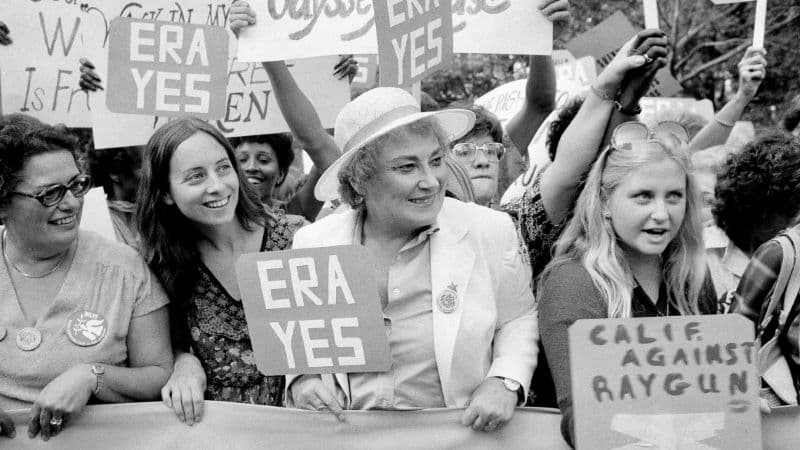
Strickland investigated what may have contributed to the failure of the Equal Rights Amendment (ERA) to pass in enough states to be ratified in the US Constitution. Unlike any previous research, he conducted a comprehensive look at the impact of lobbying on the ERA, attempting to detect influence over roll call votes by detecting correlations. He used lobbyist registration records from 374 legislative sessions (1969-1982) and he compiled a dataset of 6,952 roll call votes cast by state legislators between 1973 and 1982. Using data from State Legislative Election Returns (1967-2010), which he accessed from the ICPSR Member Archive, Strickland also looked at the possible influence of legislators’ party, gender, and race/ethnicity on their votes. Finally, he looked at the impact of state-level public opinion, using data from Gallup polls. Strickland found evidence that lobbying had some correlation with Republican votes, but it was not the primary cause of the amendment’s failure. Instead, shifting public opinion over time and the personal demographics of legislators seemed to play the most significant roles. He noted, ” . . . the amendment might have been ratified had there been more Democrats, women, and non-white people serving in the state legislatures.” Check here for more publications that use data from State Legislative Election Returns (1967-2010).
Posted April 23, 2026
Note: Current Events in the Bib are brief summaries of journal articles or other works that investigate topics currently in the news or trending in the social or behavioral health sciences. These works do not represent ICPSR’s point of view. They contain others’ findings based at least in part on their analysis of data available at ICPSR. Thousands of other works that analyze data available at ICPSR can be found in the searchable database, the ICPSR Bibliography of Data-related Literature.