A legacy of racial justice protests: Connecting 1960s sit-ins to modern BLM activism
Source citation:
- Raja, U. S., & Pendergast, P. M. (in press 2026). Protest emergence: Socioeconomic characteristics and the 1960s sit-ins predict the Black Lives Matter’s formative protest period (2014–2017). Sociological Perspectives.
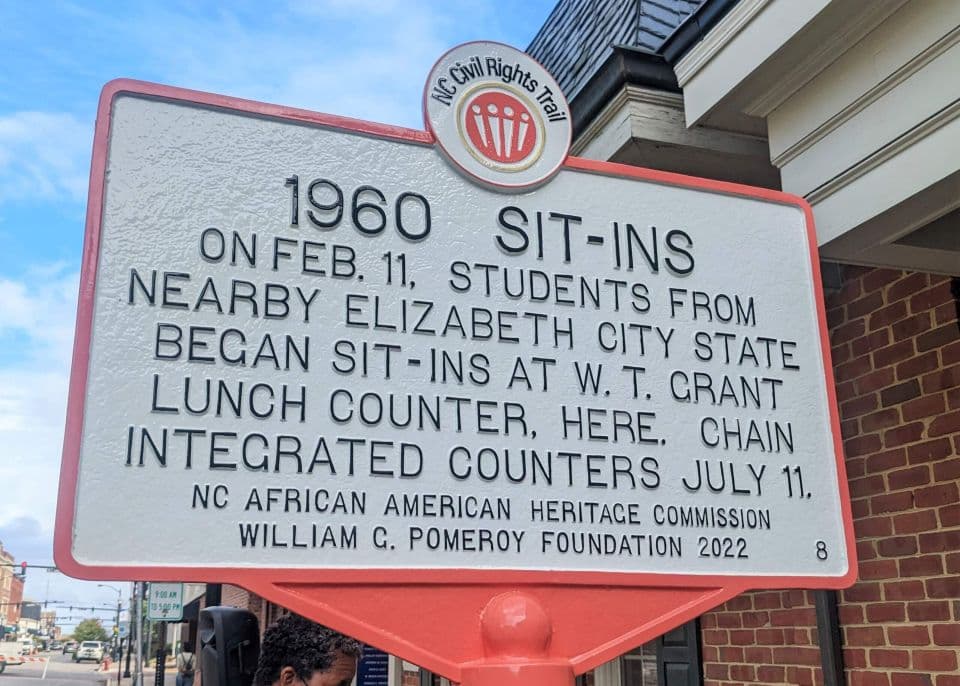
This article explores the factors influencing where and why Black Lives Matter (BLM) protests emerged during the movement’s formative years (2014-2017), including whether US counties with a legacy of sit-in activity in 1960 were more likely to engage in them. Raja and Pendergast used location data about BLM protests, aggregated to the county level; demographic and economic data from the Bureau of Labor Statistics and the US Census Bureau; as well as sources of information about the presence of BLM, NAACP, and union organizations during that time. They also made use of data from the RCMD study, Sit-ins and Desegregation in the U.S. South in the Early 1960s, including dates and locations of sit-in protests in Southern cities in 1960, which they aggregated to the county level and merged with the BLM data. They found that counties that held sit-ins in 1960 were three times more likely to host BLM protests over 50 years later, even after controlling for demographic, economic, and organizational characteristics. Beyond these historical ties, they identified several socioeconomic factors that predicted where BLM protests occurred. They were significantly more likely in counties with high income inequality, large populations of Black college students and young adults, and the organizational support of BLM chapters or labor unions.
More publications using Sit-ins data can be found here.
Posted on June 25, 2026
Note: Current Events in the Bib are brief summaries of journal articles or other works that investigate topics currently in the news or trending in the social or behavioral health sciences. These works do not represent ICPSR’s point of view. They contain others’ findings based at least in part on their analysis of data available at ICPSR. Thousands of other works that analyze data available at ICPSR can be found in the searchable database, the ICPSR Bibliography of Data-related Literature.