7 Things to Know About the ZTRAX Database at ICPSR
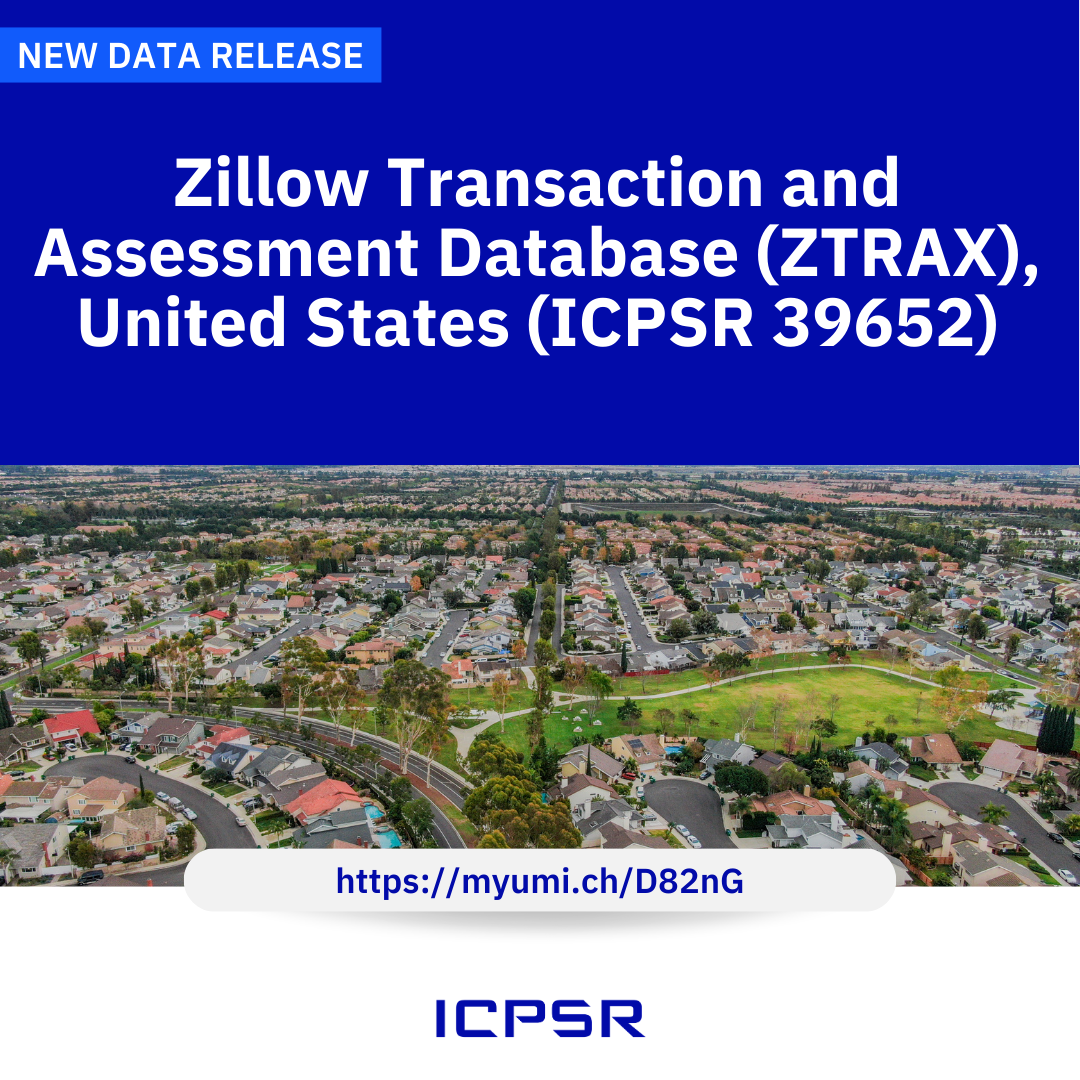
ANN ARBOR — The nation’s largest housing and real estate database, ZTRAX, is now available to researchers via ICPSR at the University of Michigan Institute for Social Research. After Zillow discontinued distribution of ZTRAX in October 2023, this move restores access to a unique resource spanning more than 20 years and over 2,750 US counties, creating new opportunities for social science, housing, and real estate research.
1. What is ZTRAX?
ZTRAX, the Zillow Transaction and Assessment Database, is the largest real estate database in the United States. It includes more than 400 million detailed public records, covering deed transfers, mortgages, foreclosures, auctions, property tax delinquencies, and more for both commercial and residential properties. It also offers property characteristics, geographic information, and prior valuations for approximately 150 million parcels across 3,100+ counties nationwide.
2. Why did ZTRAX become unavailable, and how has ICPSR made it accessible again?
Zillow discontinued the ZTRAX program in October 2023, which meant that this rich dataset was no longer available for independent research. Through an agreement in which Zillow will provide
ongoing updates to the dataset, ICPSR now exclusively hosts and distributes ZTRAX, restoring access.
3. What are some highlights of the ZTRAX dataset?
Over 400 million detailed public records across 2,750+ US counties
Data spanning more than 20 years
Coverage of deed transfers, mortgages, foreclosures, auctions, and property tax delinquencies
Rich property characteristics and prior valuations
Updated approximately twice per year
4. What does ZTRAX not include?
ZTRAX does not contain Zillow’s proprietary Zestimates, rental prices, listing data (such as time on market), or user search data. Identifiable information about property owners, borrowers, and lenders is also not included.
5. Is ZTRAX freely available and who supports its access?
Researchers interested in using ZTRAX can visit ICPSR’s ZTRAX study homepage to apply for data access. Additional support—including documentation, code repositories, and community best practices—are also linked from the study homepage, such as GitHub repositories for dataset creation and importing ZTRAX files into R or SQL databases. These data are restricted access, but documentation can be downloaded. They are distributed exclusively through ICPSR and are freely available to users at ICPSR member institutions. If you are not affiliated with an ICPSR member institution, you can still apply for access—details can be found on the ZTRAX study homepage.
6. Are there any restrictions on accessing the data?
ZTRAX data are restricted-access, but information about the data, such as file layouts and data dictionaries, are downloadable. Restricted data files are not available for direct download; click the Restricted Data button on the study homepage to learn more about how to obtain these files.
7. How is ZTRAX used in research?
“ZTRAX has become an essential tool in studies of residential segregation and other social science questions,” said Amy Pienta, ICPSR’s Director of Data Acquisitions. “It is structured to be merged with other datasets for multi-faceted research, and ICPSR’s dissemination fills an important gap left when Zillow’s original program ended,” Pienta said. “Researchers will find ICPSR’s resources and code repositories helpful for working with these rich data and pursuing innovative analyses.”
“ZTRAX has been a cornerstone dataset for understanding how America’s housing market really works—from affordability and mobility to land use. We’re thrilled that ICPSR is giving this resource a world‑class home so researchers, planners, and policymakers can continue to use it in designing smarter, more equitable solutions,” said Mischa Fisher, Chief Economist at Zillow.
For More Information:
Zillow Transaction and Assessment Database (ZTRAX), United States (ICPSR 39652)
Related:
Zillow Transaction and Assessment Database (ZTRAX) Finds New Home at ICPSR