Using Galveston Bay Recovery Study to help target disaster relief where it's needed most
Source citation:
- Shigemoto, Y., & Giniewski, W. (2025). Exploring patterns of short- and mid-term essential resource loss following hurricane Ike: A mixture modeling approach. Progress in Disaster Science, 28, 100481.
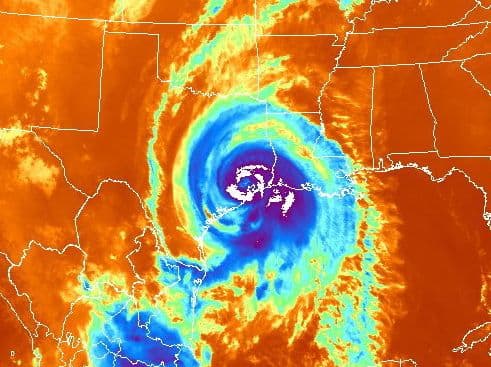
The Texas hurricane season just began, and historically most landfalls there occur between Corpus Christi and Galveston, where Hurricane Ike devastated the area in 2008. Shigemoto and Giniewski reused sociodemographic, geographic, and mental-health data gathered from 658 participants surveyed two months after Ike in the Galveston Bay Recovery Study (GBRS), 2008-2010. They used a new method of sorting victims of natural disasters into different categories based on what they lost, rather than just averaging everyone’s losses together. This could inform more targeted, equity-focused disaster responses. They found that when it came to loss of electricity, water, housing, food, money, job, transportation, clothing, and shelter, most of the participants underwent only limited disruption due to the hurricane. But disproportionately low-income, female, and racially/ethnically marginalized groups faced severe or compounded loss. Those with the highest resource loss were the most likely to have elevated PTSD and depression symptoms. Many did transition to partial recovery, but others continued to experience a high degree of loss, especially if they had financial or employment disruptions early-on. The GBRS is distributed by RCMD, and more publications using its data are available here.
Posted June 4, 2026
Note: Current Events in the Bib are brief summaries of journal articles or other works that investigate topics currently in the news or trending in the social or behavioral health sciences. These works do not represent ICPSR’s point of view. They contain others’ findings based at least in part on their analysis of data available at ICPSR. Thousands of other works that analyze data available at ICPSR can be found in the searchable database, the ICPSR Bibliography of Data-related Literature.