The strongest local public health systems experienced significantly lower death rates during the COVID-19 pandemic
July 08, 2022
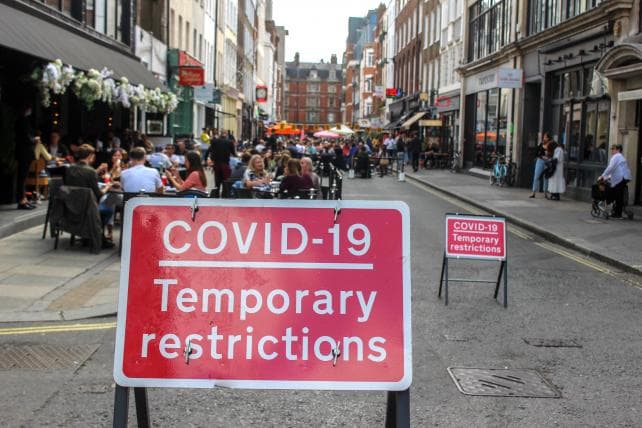
The US public health system’s ability to control COVID-19 death rates has varied widely, depending on many factors, including the capabilities of state and local public health systems, which were given many pandemic responsibilities. In their article in the May issue of Public Health Reports, authors Brosi and Mays are the first to examine directly the geographic variation in public health system capabilities and its relationship to COVID-19 control in the United States. To do so, they used data from a nationally representative survey of local public health systems, the National Longitudinal Survey of Public Health Systems (NALSYS), [United States], 1998-2018 (ICPSR 23420). Distributed by the Health and Medical Care Archive (HMCA), the NALSYS surveyed officials of local governmental public health agencies in 1998, 2006, 2012, 2014, 2016, and 2018 about the implementation of 20 guideline-recommended public health activities and the types of community organizations that cooperate in implementing each activity.
Brosi and Mays used data from the 2018 wave (the closest wave to the outbreak of the pandemic in 2020), and they chose to assess the association between public health system capability and COVID-19 death rates at three time points throughout 2020, corresponding with increases in COVID-19 cases and media reports of waves. For their analytic sample Brosi and Mays used 725 communities represented in the NALSYS, which they defined as counties, cities and towns, or districts. They then created a composite measure of public health system capability in order to classify each community’s system as “limited,” “intermediate”, or “comprehensive.” Using data from multiple sources, Brosi and Mays then estimated the relationship between these communities’ public health system capabilities and COVID-19 death rates, controlling for multiple population and community characteristics associated with COVID-19 risk. To control for individual attitudes toward COVID-19 mandates and policies, Brosi and Mays included political covariates that are not normally associated with public health, for example, the percentage of a county that voted for Trump in the 2016 presidential election.
Their analysis found “a significant correlation between public health system capabilities and COVID-19 death rates during 2020.” And the differences in death rates between “comprehensive” and “limited” or “intermediate” public health systems grew during 2020. They noted that “the widest gap in COVID-19 deaths occurred in the third wave, after virtually every state had adopted at least one mandate or policy to control the spread of COVID-19.” They also found “significant differences in COVID-19 death rates by political variables, such as county presidential voting percentages and state governor’s party.” For instance, in all three waves of the pandemic in 2020, “COVID-19 death rates were positively associated with the percentage of the county that voted for Trump in 2016.”