Racial differences in journalistic coverage of executions contributed to white embrace of capital punishment
November 25, 2022
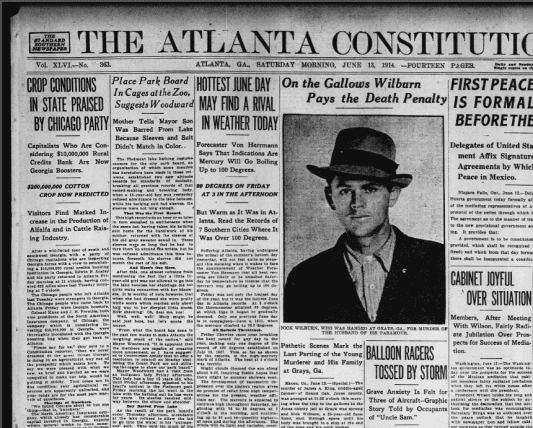
In his article published this month in Law & Social Inquiry, author Daniel LaChance conducted a comprehensive analysis of the coverage of executions between 1877 and 1936, by the Atlanta Constitution and the New Orleans (Times) Picayune. LaGrande showed how after Reconstruction, coverage of African Americans who were condemned to execution was often similar to coverage of whites. But as radical white supremacy took hold across the South from the mid-1890s to the mid-1900s, those newspapers’ coverage of Black men’s executions changed, missing elements that had served to humanize them in past reporting. Stories covering Black men’s legal executions shrank markedly in length and journalists increasingly portrayed them as “ciphers, nonentities that the state was dispatching with little fanfare.” In contrast, accounts of white men’s executions continued to be sympathetic and “to showcase their individuality and their membership in social, political, and religious communities.” Eventually, according to LaGrande, legal executions in Georgia and Louisiana overwhelmingly targeted African American men (“75 percent of all those executed in the former Confederate states from 1877 to 1936 were Black men”). But “on the pages of each state’s most prominent newspaper, the executions of white men received the most attention.” Ironically, capital punishment was increasingly represented as a high-status punishment because it happened to white people.
To conduct his analysis, LaChance identified people who had been executed under civil authority in Georgia and Louisiana, using the dataset, Executions in the United States, 1608-2002: The ESPY File (ICPSR 8451). Available from the National Archive of Criminal Justice Data, the ESPY file describes each individual who was executed and the circumstances surrounding the crime for which the person was convicted. Variables include age, race, name, sex, and occupation of the offender; place, jurisdiction, date, and method of execution; and the crime for which the offender was executed. Find other publications using ESPY File data, linked in the ICPSR Bibliography and available on the study’s home page.