Putin’s Ukraine invasion may drive down support among Russian elites
March 04, 2022
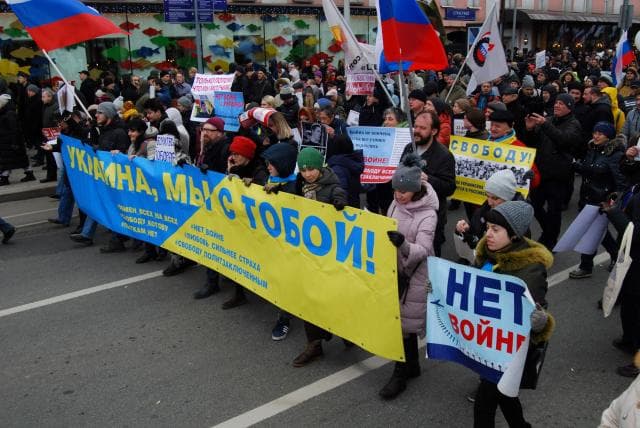
Last week, the Washington Post’s Monkey Cage blog featured a post by Sharon Werning Rivera, who noted, “Like all authoritarian leaders, Putin must be careful to keep the highest-ranking members of Russian society on his side.” This may be especially difficult after Putin’s invasion of Ukraine, “given the West’s sweeping countermeasures designed to impose economic pain.” Rivera is one of the principal investigators of the Survey of Russian Elites (SRE), Moscow, Russia, 1993-2016 (ICPSR 3724). The only repeated cross-sectional survey data of its kind, every four years it is collected via interviews with approximately 240 high-ranking Russians based in Moscow. The combined SRE data set, including the 2020 wave scheduled to be released from ICPSR later this month, includes 1,909 interviews with Russians working in a broad range of occupations, all with some connection to foreign policy issues. This includes individuals employed in the media, state-owned enterprises, private businesses, academic institutions with strong international connections, the executive branch of the government, the federal legislature, and the armed forces and security agencies. According to Rivera, the 2020 survey results point to two main reasons “why elites will be ambivalent about a costly military campaign” in Ukraine. The first is their declining support for a unified Russia and Ukraine, down from 65% in 1995 to only 5% in 2020. And the second is that “elites have consistently been more concerned about how failing to solve domestic problems threatens Russia’s security than about threats emanating from the West.” Rivera concludes, “If military action in Ukraine and its consequences for the Russian economy make it impossible for the Kremlin to progress on key domestic concerns . . . Putin may lose elite support for any bid to stay in power beyond 2024.” Anti-war protests also may affect the attitudes of Russian elites. Researchers have found the SRE useful for testing how this “important but opaque” group responds to domestic protests in an authoritarian context–one in which the state’s power to manipulate media messaging plays a strong role. For instance, in their 2021 article in the journal Democratization, authors Bryan and Perevenzentseva utilized the 2016 SRE data, collected in the same time period in which there were peaceful protests in Moscow to commemorate the death of Russian opposition figure, Boris Nemtsov, who was shot in 2015. According to the authors, although “the protest activity was able to generate a temporary shift in the attitudes of the elites, their short-lived effect reflects the Kremlin’s successful strategy to diffuse and deemphasize the protest.” That said, their findings also show that “the Russian elite appears to be responsive to social movement cues and can be at least somewhat sympathetic to certain forms of opposition protest.” This may be put to the test now that a full-scale invasion of Ukraine has begun, and such protests are ongoing. Check the ICPSR Bibliography for more publications using SRE data.