Political polarization weakens the link between the economy and voting
August 23, 2024
Source citation: Embree, R. (2024). The unswayed voter: How a polarized electorate responds to economic growth. Electoral Studies, 90, 1-59.
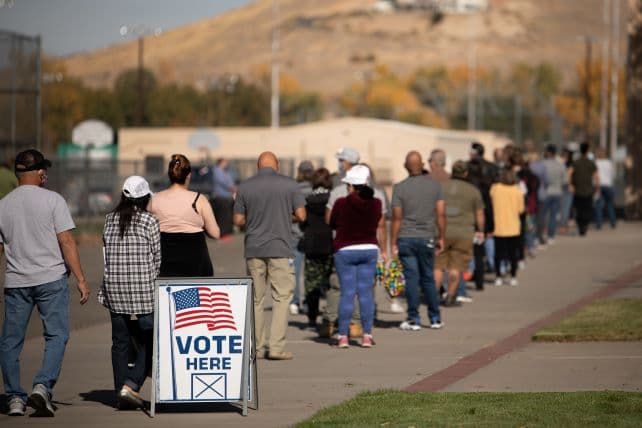
The phrase, “It’s the economy, stupid,” once reliably applied to US voting behavior in presidential elections. But over the past several decades, the US electorate has become more polarized, so there are fewer swing voters, who by definition do not vote strictly by party affiliation. To show the impact of this shift, author Robert Embree developed a model to analyze state-level data on election outcomes, demographics, and economic growth using multiple sources, including data from the ICPSR studies, Historical, Demographic, Economic, and Social Data: The United States, 1790-2002, and the Consumer Price Index, 1913-1992. He also looked at individual-level survey data from several decades of the American National Election Study (ANES). Embree’s model indicated that while state-level economic growth does affect presidential elections, this effect is weaker in more politically polarized states. And individual voters who are more partisan are less likely to be swing voters, therefore their votes are less influenced by the economy’s performance. Embree cautions that incumbents may be less accountable “if economic outcomes have a reduced effect on the prospect of re-election. Indeed, incumbents who adopt deliberately polarizing strategies may be counting on precisely this effect.”