Newly released data from Malawi during an AIDS epidemic helps to understand unplanned births in a context of adversity
September 01, 2022
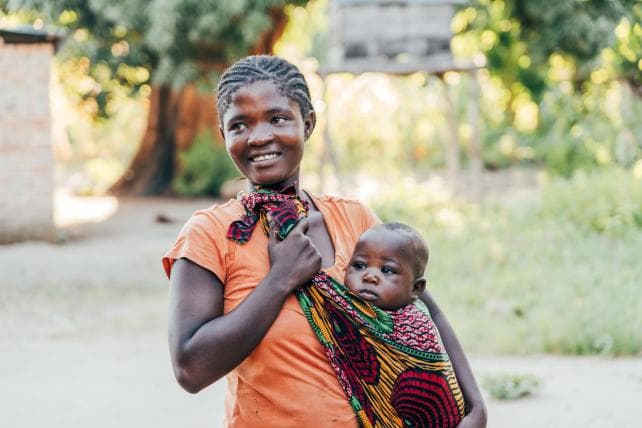
Last week, Data Sharing for Demographic Research (DSDR) released the study, Tsogolo La Thanzi 2 (TLT-2), Malawi, 2015 [Healthy Futures] (ICPSR 38444). It contains follow-up data to the multi-wave Tsogolo La Thanzi (TLT) study, which took place between 2009 and 2012 in Balaka, Malawi, and was designed to examine how young people navigate reproduction, as the first generation to never have experienced life without an AIDS epidemic. In the baseline wave, women answered a survey about their reproductive behavior, with variables that pertain to pregnancy, family composition, partners and relationships, mental health, marriage, sex and protection, sexually transmitted diseases, goods purchases, and diet. The TLT additionally interviewed the male partners of these women and also random men of the same age, asking similar questions. To understand reproductive goals and patterns of family formation in this setting, TLT interviewed the respondents, who were aged 15-25 at baseline, every four months throughout the three years of the study. To assess changes on a longer time-horizon, the TLT-2 was fielded in 2015.
In their article appearing in the July issue of Maternal and Child Health, authors Chamberlin et al. made use of the follow-up data to investigate how post-birth experiences affect women’s recall of their pregnancy planning in a context of adversity. They focused on TLT-2 respondents who were pregnant in 2015, who answered close-ended questions about the planning of their pregnancy. Three years after the study’s conclusion, 17 participants agreed to be interviewed about their life experiences since the pregnancy and to be re-asked a subset of the same questions about the planning of the 2015 pregnancy. (These data are not contained in TLT2.) The researchers found that “women whose lives were marked by relationship instability and general adversity following their child’s birth” were more likely to characterize what they initially described as a planned pregnancy as an unplanned one when asked retrospectively. These women had undergone adverse life experiences like “a lack of support from the child’s father, economic insecurity, or a father migrating to for work.” In contrast, Chamberlin et al. found that “women who recalled their pregnancies as planned when asked post-birth . . . had relatively positive life experiences since the birth of their child.” The authors pointed out that “a woman’s recollection of her pregnancy planning may be as much a consequence of her lived adversity as it is a cause.” They note that researchers who want to study the impact of unplanned pregnancy should be aware of the risk of recall bias. They suggest, “Approaches that measure pregnancy planning before the child’s birth are critical for understanding how women’s lives do, or do not, diverge following an unplanned birth.” More publications using data from the studies in the TLT series can be found here.