Improving the accuracy of weather satellite images, using World Data Bank II geographic location data
Source citation:
- Deng, Z., & Ma, X. (2026). A frequency-based approach to improve the geometric accuracy of FY4B/AGRI geostationary satellite observations. Science of Remote Sensing, 13.
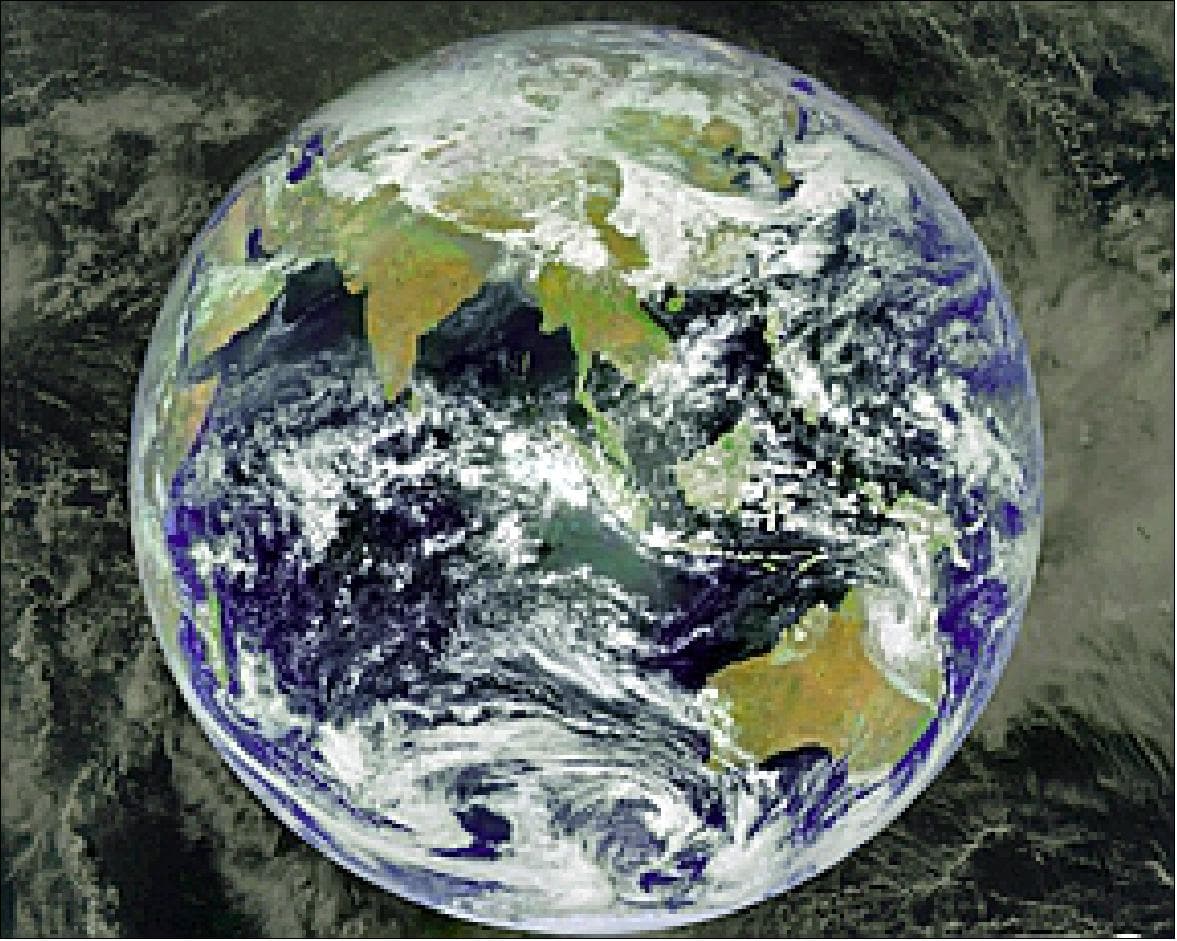
Deng and Ma evaluated a year’s worth of data captured with the Chinese FengYun-4B (FY4B) meteorological satellite, one of the new generation of geostationary satellites that ring the globe. Deng and Ma identified significant alignment errors it was making in the images it captured. The two then developed an automated system to fix those errors, enabling the capture of more accurate images critical for monitoring natural disasters and tracking environmental changes. Their complex system in part requires comparing textures and patterns in the satellite images to known geographic features, in order to calculate exactly how much the images need to be shifted to match reality. They used a detailed and highly processed geographic database to serve as a reliable reference for coastlines and inland lakes. The database combines boundary mapping coordinates from two datasets in the public domain: the World Vector Shorelines and the World Data Bank II. The raw dataset, World Data Bank II: North America, South America, Europe, Africa, Asia, created by the CIA to enable digitized mapmaking, is available in the ICPSR Member Archive.
Posted on March 26, 2026
Note: Current Events in the Bib are brief summaries of journal articles or other works that investigate topics currently in the news or trending in the social or behavioral health sciences. These works do not represent ICPSR’s point of view. They contain others’ findings based at least in part on their analysis of data available at ICPSR. Thousands of other works that analyze data available at ICPSR can be found in the searchable database, the ICPSR Bibliography of Data-related Literature.