Feelings of obligation can cause stress in low-income mothers after receiving help from informal support networks, and can have a negative impact on their children's behavior
March 25, 2022
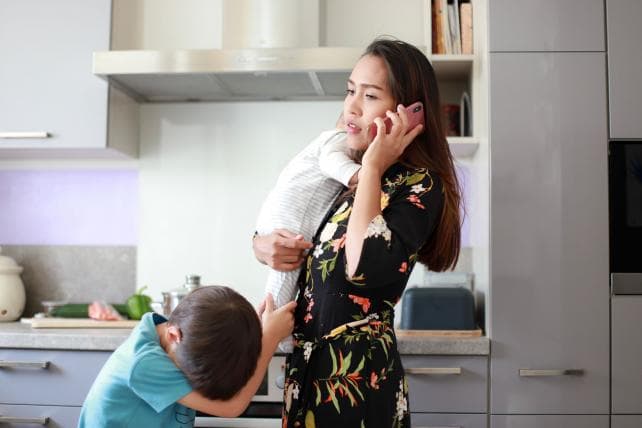
In an article first published online this month in Family Relations, authors Raney et al. note that when welfare reform legislation occurred in the 1990s in the United States, the public safety net became more tenuous, and so mothers who do not qualify or apply for public assistance rely more on informal support networks of friends and family. These networks are generally thought to be important for helping low-income mothers meet basic needs, decreasing their stress and improving child health. But Raney et al. wanted to consider “the obligations that such informal support access may impart.” So they used longitudinal data from a sample of low-income mothers and their children “to examine how informal support and obligation, or informal networks, contribute to children’s behavior.” They also “tested the potential mediating role of maternal parenting stress.” The data they used came from all three waves of Welfare, Children, and Families: A Three-City Study (ICPSR 4701). Distributed by the Data Sharing for Demographic Research archive at ICPSR, the original purpose of the Three-City Study was to provide insight about low-income families’ lives post-welfare reform. In-home, face-to-face, baseline data were collected in 1999 from 2,443 low-income female caregivers of children and adolescents living in Boston, Chicago, or San Antonio, with follow-up visits and surveys taking place 1.5 (2000–2001) and 6 years later (2005–2006).
Raney et al. found that “mothers with healthy safety nets, including informal support and manageable obligations, had children with fewer behavior problems.” And lower levels of maternal parenting stress partially accounted for the positive effects. On the other hand, they found that “one-sided support or obligation can be problematic for both maternal stress and child behavior problems.” This finding highlights “the importance of considering reciprocity norms among low-income mothers,” but the authors noted that some may not have “the skills or resources to develop and navigate healthy kin relationships” necessary to avoid an imbalance between support and obligation. The authors cite research showing that low-income mothers could benefit from interventions that teach and facilitate healthy, reciprocal relationships. For many other examples of publications using data from the Three-City Study, go to the Data-related Publications tab on the study home page.