Expanding access to food assistance is linked to less domestic violence
October 27, 2023
Source citation: Austin, A. E., Shanahan, M., Frank, M., Reyes, H. L. M., Ammerman, A., & Short, N. A. (2023). State expansion of supplemental nutrition assistance program eligibility and rates of interpersonal violence. Preventive Medicine, 175, 107725.
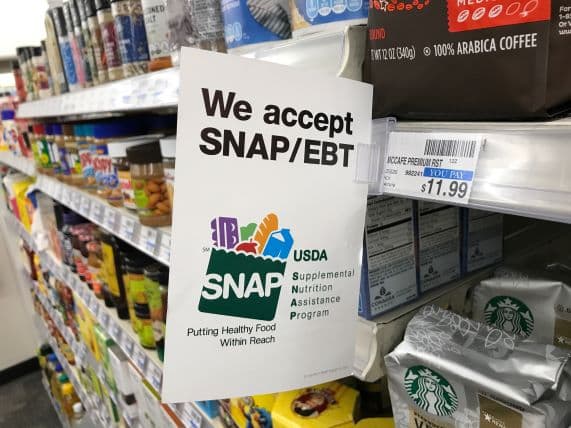
In this article, authors Austin et al. noted a growing body of research indicating that food insecurity is an economic stressor that can lead to interpersonal violence. The US government attempts to reduce food insecurity with programs like the Supplemental Nutrition Assistance Program (SNAP), which provides over 20 million Americans with food assistance. But the federal eligibility guidelines to qualify for SNAP require household income and assets to be exceedingly low, leaving out many people in need. But US states can opt to broaden the eligibility criteria, which allows them to include many more of their residents in the program. Austin et al. were interested to see whether interpersonal violence was reduced in states that chose to expand access to SNAP. They conducted a secondary analysis of state-level estimates of rates of interpersonal violence, collected between 2012 and 2018 in the National Crime Victimization Survey (NCVS), available via the National Archive of Criminal Justice Data (NACJD). Administered twice each year by the US Census Bureau on behalf of the Bureau of Justice Statistics to a nationally representative sample of 49,000 households, the NCVS asks respondents to report crime experiences that occurred in the last six months, including the type of crime; severity of the crime; injuries or losses; time and place of occurrence; medical expenses incurred; and number, age, race, and sex of the offender(s). Austin et al. focused on data about the relationship of the offender(s) to the victim (stranger, casual acquaintance, relative, etc.) and compared changes in violence rates over time between states that expanded eligibility for SNAP versus those that didn’t. They found that states that eliminated the asset test and increased the income limit, thereby increasing the number of people eligible for food stamps, saw greater declines in domestic violence at the population level, compared to states that didn’t broaden access to food aid. States that eliminated asset tests and increased income limits for SNAP eligibility saw 0.4 fewer incidents of intimate partner violence per 1,000 people and 2.4 fewer incidents of violence by family members or acquaintances. (There was no change in stranger violence, which was attributed to the assumption that interpersonal and other relationship violence are more likely to be affected by economic stress than stranger violence, which is more likely to be driven by criminal opportunity.) Austin et al. concluded that programs like SNAP that help low-income families meet basic needs may also reduce stress, conflict, and violence in relationships.