College education transforming marriage for Indian women
May 17, 2024
Source citation: Vikram, K. (2024). Modern marriage in a traditional society: The influence of college education on marriage in India. Journal of Family Issues, 45(5), 1116–1141.
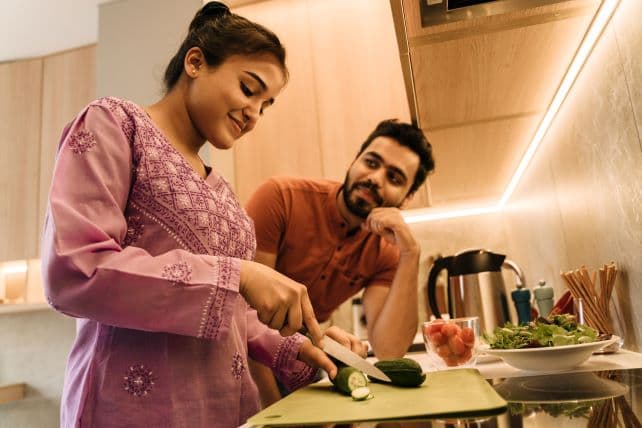
According to author Kriti Vikram, there has been a major shift toward higher education for women in India since the 1990s, and they now outnumber men in some highly competitive medical and science programs. While this has not necessarily led to women joining the workforce in equal numbers to men, Vikram contended that higher education may have given women more influence and autonomy, specifically within marriage. To show this, she used data from over 35,000 currently married women who participated in the India Human Development Survey (IHDS-II), conducted in 2011-12 and distributed by DSDR. The IHDS-II was a multi-topic survey of a large, nationally representative sample of 42,152 households in 1,503 villages and 971 urban neighborhoods. It provided extensive information on marriage, education, work, and decision-making, enabling Vikram to analyze data on women’s age at marriage; their autonomy in the choice of spouse; their work and financial empowerment; and the quality of their marital relationships. She found that college-educated women tended to get married later, have more say in choosing their husband, and have more equal spousal relationships compared to women with less education. Having equal or higher education levels than their husbands also gave these women an advantage in making important life decisions. The IHDS-II data also showed shifts in marriage trends over time. Women who got married more recently tended to do so at an older age compared to those who married in the 1970s. Overall, college education emerged as a driving force behind more equal gender dynamics within marriages, even in a traditionally patriarchal society like India.