Philippa Clarke
Biography
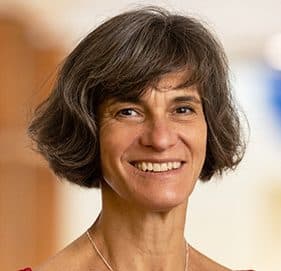
Research Professor at the University of Michigan’s Institute for Social Research, and Professor in the University of Michigan’s School of Public Health, Dr. Clarke received her Ph.D. in Public Health from the University of Toronto in 2000. Her research interests are in social epidemiology, social gerontology, life course perspectives, models of disability, and population health. Her research examines the role of the built and social environment for disability, cognitive function, and social participation. She has used various methods to capture characteristics in the built environment, including the use of secondary data sources (e.g., Census, NETS), in-person neighborhood audits (using Systematic Social Observation), and virtual web-based neighborhood audits (using Google Street View). She has compared the reliability and validity of these different methods, publishing one of the first papers on the use of Google Street View for this purpose. She also directs the National Neighborhood Data Archive (NaNDA) (nanda.isr.umich.edu) a nation-wide repository of publicly available contextual data spanning close to two decades. The goal of NaNDA is to minimize redundancy in the creation of contextual measures across federally funded research projects and to promote the examination of spatial contexts as they relate to health inequalities in other survey, cohort, or clinical data.
Selected Publications
- Demidenko MI, Huntley ED, Du L,…Clarke PJ, Keating DP. Individual and community level developmental adversities: associations with marijuana and alcohol use in late-adolescents and young adults. J Youth Adolesc. 2024;53(4):799-813. doi:10.1007/s10964-023-01881-9
- Kim MH, Dunkle R, Clarke PJ. Neighborhood resources and risk of cognitive decline among a community-dwelling long-term care population in the U.S. Public Health Pract. 2023;6:100433. doi:10.1016/j.puhip.2023.100433
- Jones MG, Clarke PJ, Meshesha HS, Mulhorn KA, Traci MA, Nieuwenhuijsen ER. COVID-19, disability, and the international classification of functioning, disability and health: a scoping review of early-stage pandemic response. AJPM Focus. 2023;3(1):100152. doi:10.1016/j.focus.2023.100152
- Rollings KA, Noppert GA, Griggs JJ, Melendez RA, Clarke PJ. Comparison of two area-level socioeconomic deprivation indices: implications for public health research, practice, and policy. PLoS One. 2023;18(10):e0292281. doi:10.1371/journal.pone.0292281
- Twardzik E, Falvey JR, Clarke PJ, Freedman VA, Schrack JA. Public transit stop density is associated with walking for exercise among a national sample of older adults. BMC Geriatr. 2023;23(1):596. doi:10.1186/s12877-023-04253-x
- Noppert GA, Duchowny KA, Stebbins R, Aiello AE, Dowd JB, Clarke P. Biological expressions of early life trauma in the immune system of older adults. PLoS One. 2023;18(6):e0286141. doi:10.1371/journal.pone.0286141
- Khan AM, Lin P, Kamdar N, Mahmoudi E, Clarke PJ. Continuity of care in adults aging with cerebral palsy and spina bifida: the importance of community healthcare and socioeconomic context. Disabilities. 2023;3(2):295-306. doi:10.3390/disabilities3020019
- Onishchenko R, Clarke PJ, Marshall C, Wyant KJ, Kotagal V. Neighborhood social determinants of health in patients seen in neurology movement disorders clinics. Neurol Clin Pract. 2023;13(2):e200142. doi:10.1212/CPJ.0000000000200142
- Yu W, Esposito M, Li M, Clarke PJ, Judd S, Finlay J. Neighborhood ‘disamenities’: local barriers and cognitive function among Black and white aging adults. BMC Public Health. 2023;23(1):197. doi:10.1186/s12889-023-15026-x
- Veinot TC, Clarke PJ, Romero DM, et al. Equitable research PRAXIS: A framework for health informatics methods. Yearb Med Inform. 2022;31(1):307-316. doi:10.1055/s-0042-1742542